Most visitors assume “Sedona” is Spanish. Some assume it’s a Native American word. A few assume it means something poetic about red rock or sacred ground.
It’s none of those. Sedona is a woman’s first name. Sedona Schnebly was a real person who lived here, and who reportedly never especially liked having a town named after her.
Here’s the story.
A Young Couple, a Wagon, and a Canyon Nobody Wanted
In 1901, Theodore Carlton Schnebly, T.C. to everyone, moved from Missouri to the Oak Creek area of Arizona Territory with his wife and their children. This was not a resort town. It was not a town at all. It was a remote stretch of canyon and red rock with a handful of homesteading families, no real road out, and a reputation for being beautiful and thoroughly impractical.
The Schneblys built a large house, took in travelers, farmed, and hauled produce over rough terrain to Flagstaff and Jerome. T.C., being an enterprising sort, also became the settlement’s first postmaster.
Which is where the name comes in.
The Names That Got Rejected
To establish a post office, T.C. had to submit a name for the community. He tried the obvious, descriptive options, names built around the landmarks and features of the place, in the way most Western towns were named.
They were rejected. The reason given was straightforward and bureaucratic: the proposed names were too long to fit the postal cancellation stamp.
According to the account passed down through the family and repeated in local histories ever since, T.C.’s brother offered a suggestion: why not use his wife’s name? It was short. It was unusual. Nobody else had it.
Her name was Sedona.
The application went through. The post office was established in 1902, and the name stuck to the settlement, then the town, then eventually to one of the most recognized destinations in the American Southwest.
Who Was Sedona Schnebly?
Sedona Miller was born in Missouri in 1877. By most accounts she was known for hospitality on a scale that’s hard to imagine now, feeding and housing travelers who arrived at the homestead, in a place where the nearest alternative was a very long ride away.
The family’s time in the canyon was not uncomplicated. They endured genuine hardship, including the death of a child, and left Arizona for a period before eventually returning. Sedona lived in the area for much of her later life and died in 1950, by which point the town carrying her name had grown into something she could not have anticipated.
There’s a persistent thread in local accounts that she found the naming somewhat embarrassing, that having a town named after you was, for a woman of that era and temperament, more attention than she’d have chosen.
Where the Name Came From in the First Place
Here’s the part that makes it more interesting: nobody is entirely certain where Sedona as a name came from.
It doesn’t have a clear established origin as a traditional given name. The most commonly repeated explanation is that her mother simply liked the sound of it and made it up, which, if true, means one of the most famous place names in the American West began as an invented name a Missouri mother thought was pretty.
Other accounts have circulated over the years, but the invented-name version remains the one most often told locally, and no one has definitively settled it.
Why the Sedona Schnebly Story Sticks
Most Western towns are named for a geographic feature, a railroad official, a mining claim, or a founder’s hometown. Sedona is named for a woman who wasn’t famous, didn’t ask for it, and got the honor essentially because her name was short enough to fit on a rubber stamp.
There’s something appropriate about it. Sedona has always been a place people arrive at somewhat sideways and then can’t quite leave.
Where You Can See the History
If the story catches you, a few places bring it closer:
- The Sedona Heritage Museum in Uptown, set in a preserved historic homestead property, covers the town’s settlement era, its orchard-farming history, and its unlikely stint as a Hollywood filming location. Hours and admission are listed on the Sedona Heritage Museum site.
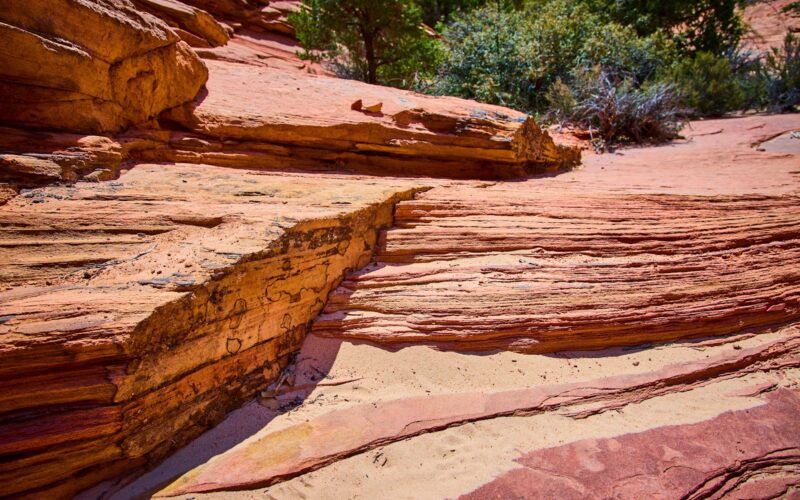
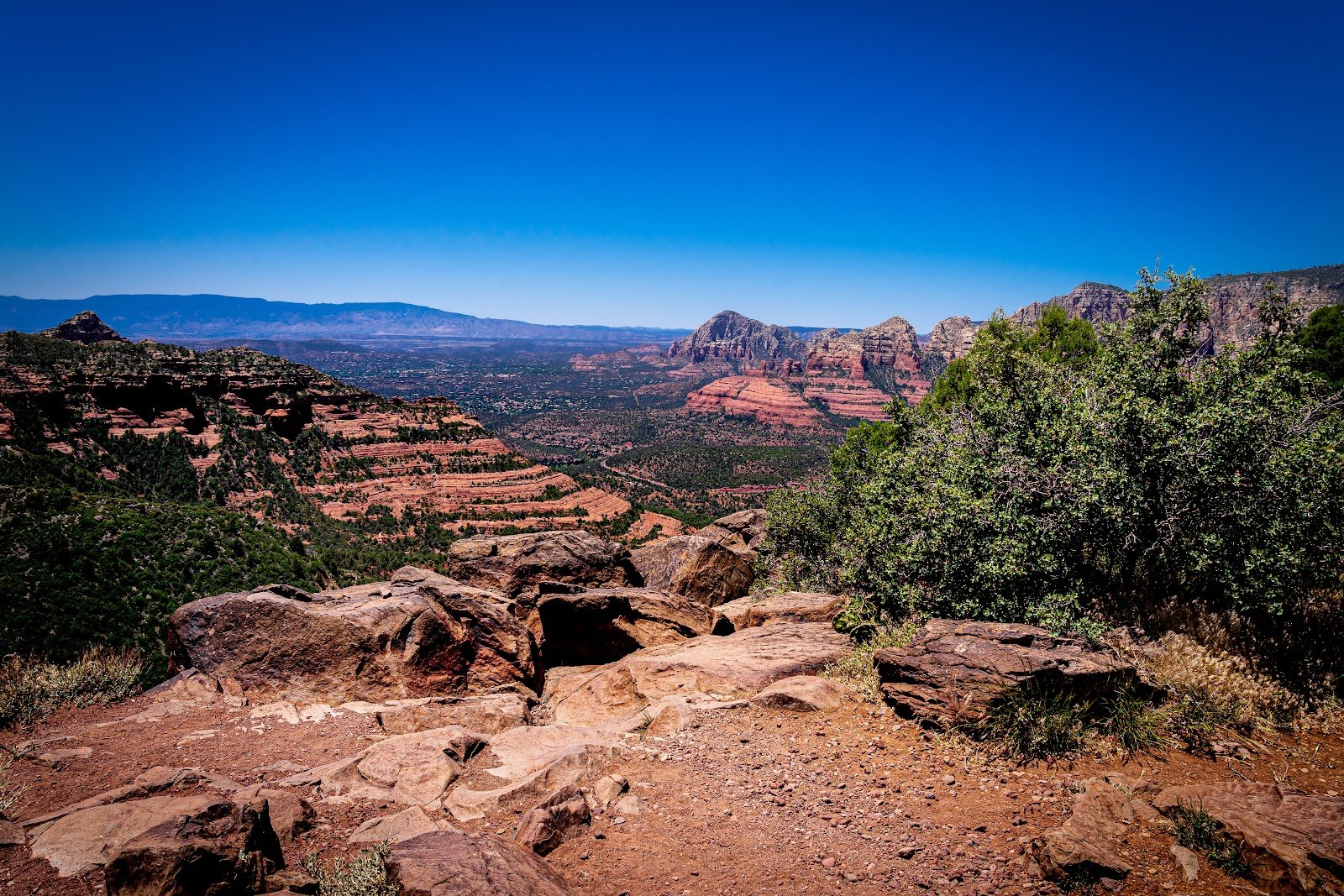
- Schnebly Hill Road carries the family name, and the geological formation that gives Sedona’s red rocks much of their color is called the Schnebly Hill Formation, meaning the family name is attached to both the map and the stone itself.
- Oak Creek is still the reason anyone settled here at all, reliable water in dry country.
It’s a good half day when you want something between hikes.
Stay Where the Story Happened
Sedona has grown considerably since 1902, but the thing that brought the Schneblys here hasn’t changed: the light on the rocks, the creek, and the particular quiet of a place that’s hard to get to and hard to leave.
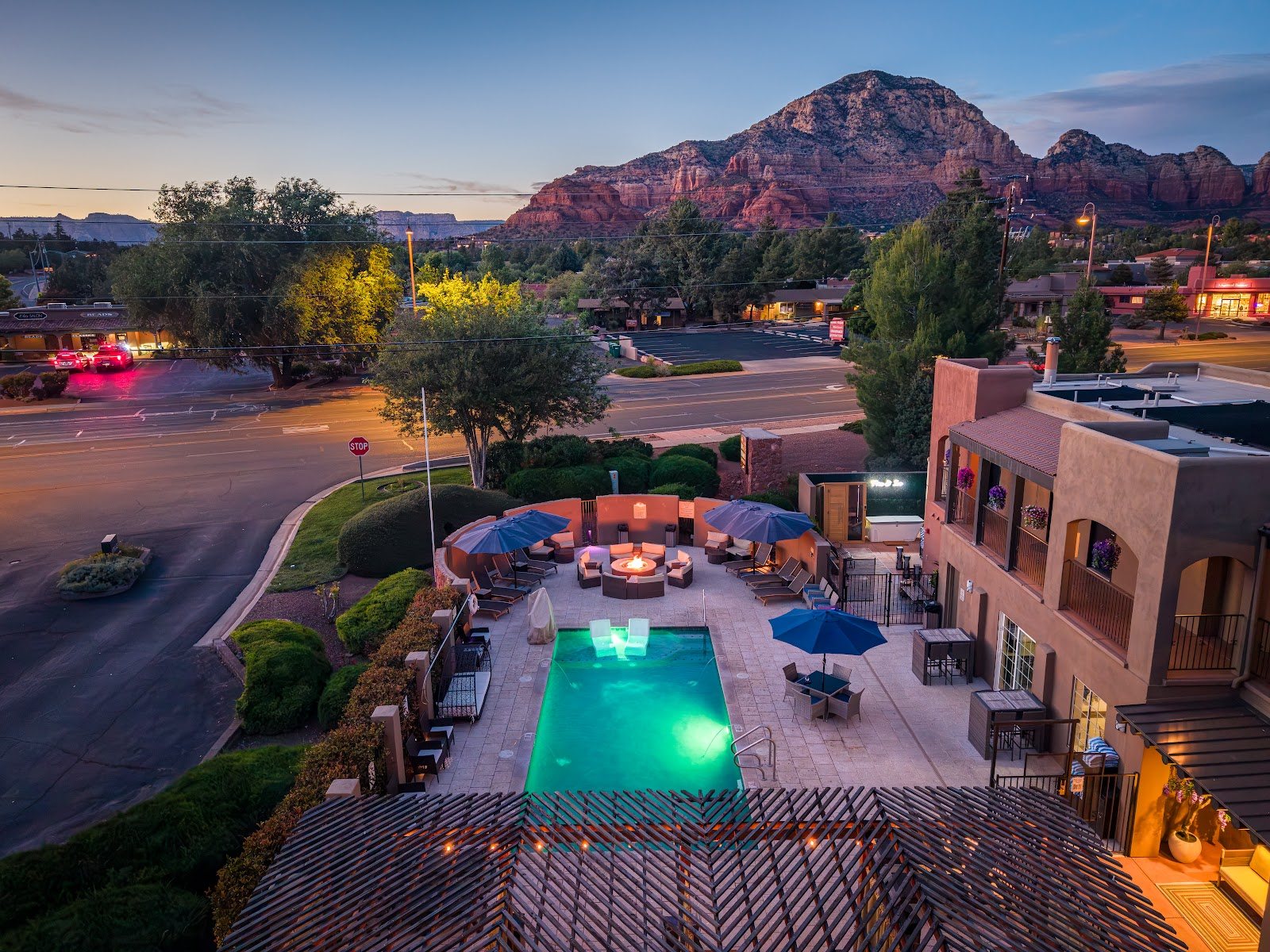
Arroyo Pinion sits in West Sedona, close to the trailheads and a short drive from Uptown and the Heritage Museum, a boutique wellness property built for people who want the red rocks by day and something genuinely restful at the end of it. The on-site wellness suite covers a salt room, red light therapy, and a relaxation room, alongside gentle yoga and rooms with patios and fireplaces for the cool evenings.
Come see what a Missouri family thought was worth the wagon ride.