

On this page
You came to Sedona to slow down. Maybe you've already done the hike, already watched the light turn the red rocks orange, and you still feel a low hum of tension that followed you up the highway. That's normal. Most of us arrive carrying the week with us, and it takes a couple of days before the body gets the message that it's on vacation.
Qigong is one of the gentlest ways to close that gap. It's slow, it's quiet, and you don't need to be flexible, fit or experienced to do it. This guide covers what qigong is, how it differs from tai chi, what a beginner session actually feels like, and how to try it at Reset & Restore, the new guided wellness session at Arroyo Pinion in West Sedona.
What Is Qigong?
Qigong (pronounced "chee-gong") is a mind-body practice that combines slow, flowing movement, steady breathing and focused attention. According to the National Center for Complementary and Integrative Health, it was developed in China thousands of years ago as part of traditional Chinese medicine.
The name has two parts. Qi is usually translated as breath or life energy, and gong means a skill you build through steady practice. Put together, qigong is the practice of working with your breath and your body's energy through simple, repeated movement.
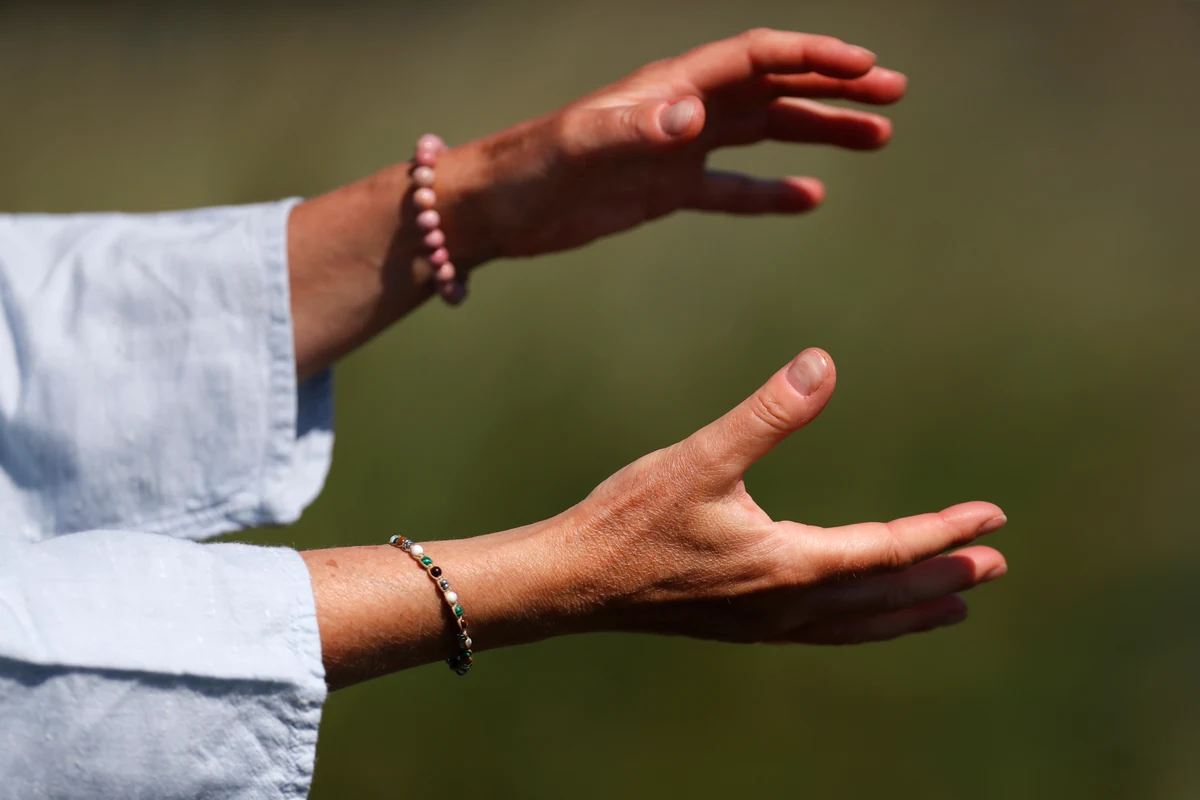
In a typical beginner class, you stand with soft knees (or sit, if standing is uncomfortable), move your arms and body slowly through a few easy patterns, and match each movement to an inhale or an exhale. There are hundreds of styles. Some use a single movement repeated many times; others string a handful of movements into a short sequence. None of them ask you to hold a hard pose, count reps or keep up with anyone.
That's the appeal for first-timers: there's nothing to "get right." You move, you breathe, and you notice how you feel.
Qigong vs. Tai Chi: What's the Difference?
If qigong sounds a lot like tai chi, you're on the right track. NCCIH notes that when tai chi is practiced for health, it's considered a form of qigong, one of hundreds of qigong styles developed in China. The two share the same foundation: slow movement, controlled breathing and a calm, focused mind.
The differences are mostly practical:
- Length and complexity. Tai chi is usually taught as a longer, choreographed sequence that takes weeks or months to learn. Qigong often uses short movements you can follow on day one.
- Roots. Tai chi grew out of martial arts, and you can see it in the stances and weight shifts. Qigong is more closely tied to breathing and health practices.
- Barrier to entry. Because qigong movements are simpler and often repeated, it's easier to relax into them without watching the instructor the whole time.
For a traveler with one afternoon free, qigong is the friendlier starting point. If you love it, tai chi is a natural next step when you get home.
What a Beginner Qigong Session Feels Like
If you've never tried a mind-body class, it helps to know what you're walking into. A beginner qigong session usually follows a simple arc:
- Arriving and settling. You stand comfortably, feet about hip-width apart, and take a few slow breaths. The instructor may ask you to notice where you're holding tension, often the jaw, shoulders or lower back.
- Warming up. Gentle shaking, tapping or rolling through the joints to loosen up. It feels a little silly for about thirty seconds, then it feels great.
- Core movements. Slow, flowing patterns, such as raising the arms on an inhale and floating them down on an exhale, repeated until the rhythm feels natural.
- Closing. A few minutes of stillness and easy breathing to let everything settle before you head back into your day.
People describe the after-feeling in different ways: warm hands, looser shoulders, a quieter head, or simply feeling more awake and less rushed. Some people don't notice much the first time, and that's fine too. Like most practices, it tends to land more with a little repetition.
Wear something you can move in, bring water, and leave your phone in your room. You won't need it.
What Qigong Can (and Can't) Do for You
It's worth being honest here. Qigong has been practiced for centuries, but modern research on it is still fairly limited, and many studies are small. NCCIH reports that reviews have found positive effects of qigong and tai chi on anxiety, stress, mood and overall quality of life, although not every result was statistically significant.
The practical takeaway: treat qigong as a relaxing, low-impact way to slow down and check in with your body, not as a treatment for anything. It's generally considered safe and low intensity. Minor aches are possible, as with any new movement, and if you're pregnant or have a health condition, check with your healthcare provider before starting a new exercise practice.
Pro Tip: Plan your day so qigong comes after your most active hours. Hike in the cool of the morning, rest at midday, then join an afternoon session when your legs are tired and your mind is ready to slow down. Sedona sits at roughly 4,350 feet in the dry high desert, so drink water before you start, and bring a layer in late fall, when afternoons cool off quickly.
Introducing Reset & Restore at Arroyo Pinion
Arroyo Pinion has spent the past year building out its wellness offering, and Reset & Restore adds something the hotel hasn't had before: a guided, human-led session. It's a calm, beginner-friendly class built around four elements:
- Gentle, guided relaxation to help quiet a busy mind
- Mindful breathing you can use anytime, anywhere
- Simple somatic techniques that help release tension stored in the body
- An introduction to qigong, with slow, flowing movements that bring breath and body together
Whether you're a seasoned wellness traveler or someone who has never tried a breathing exercise in your life, you'll feel at home. It's free for hotel guests, and there's no special gear, no experience and no pressure.
When: Wednesday, Friday and Saturday at 4:00 PM
Where: Arroyo Pinion Hotel, West Sedona
Length: 45 minutes
Led by: Patrick, our Reset & Restore facilitator
Cost: Free for hotel guests (guests only)
Reservations: Save your spot with the front desk, by phone at (928) 204-1146 or in person
Experience needed: None

How to Build a Sedona Wellness Retreat Around Qigong
Sedona has drawn wellness travelers for decades, for the trails, the quiet desert mornings and the sense that this landscape helps people reconnect. Visit Sedona is a good starting point for planning the bigger picture. Reset & Restore fits neatly into that kind of trip, and it pairs well with what's already on property. Here are a few easy ways to build a wellness day around it:
- Pair it with a morning hike. Head out early, when trails are cooler and quieter. Arroyo Pinion is a short drive from Red Rock State Park, and you can browse beginner-friendly trails nearby on AllTrails. Check current conditions and any closures with the Coconino National Forest before you go. Then come back for a 4:00 PM session to stretch, breathe and let your body recover.
- Make it your arrival ritual. Checking in on a Wednesday, Friday or Saturday? Start your stay with a session and let the drive melt away before dinner.
- Build a full wellness afternoon. Follow Reset & Restore with a round of Fire & Ice, the cedar sauna and cold plunge that's included with your stay, or book a session in the Himalayan salt room or on the red light therapy bed. The relaxation room, with its zero-gravity massage chairs, is a quiet place to land afterward.
- Bring a friend or partner. It's a calm, shared experience that makes an easy addition to a couples getaway or a girls' trip.
Who Reset & Restore Is For
Honestly? Almost everyone. It's a great fit if you:
- Feel stressed, tired or stretched too thin
- Want to try qigong for the first time but aren't sure where to start
- Prefer gentle movement over an intense workout
- Want simple, practical tools for stress you can use at home
- Came to Sedona to unwind, reconnect and recharge
The best part is that what you learn doesn't stay in Sedona. A few slow breaths before a meeting or two minutes of qigong at the end of a long day are tools you can carry home.
Qigong FAQ
What is qigong? Qigong is a mind-body practice that combines slow, flowing movement, steady breathing and focused attention. It was developed in China thousands of years ago as part of traditional Chinese medicine.
Is qigong the same as tai chi? They're closely related. Tai chi practiced for health is considered one form of qigong. Qigong movements are usually shorter and simpler, which makes them easier for beginners to pick up in one session.
Do I need experience to try qigong? No. Qigong is beginner-friendly, and Reset & Restore is designed for people who have never tried it.
Where can I try qigong in Sedona? Arroyo Pinion in West Sedona offers an introduction to qigong in its Reset & Restore session every Wednesday, Friday and Saturday at 4:00 PM. The 45-minute session is free for hotel guests.
Is Reset & Restore free, and how do I book? Yes, it's free for hotel guests (the session is for guests only). Save your spot with the front desk, either by calling (928) 204-1146 or stopping by in person.
What should I wear to a qigong session? Comfortable clothes you can move in and supportive shoes or bare feet, depending on the space. Bring water and a light layer for cooler afternoons.

Make Your Sedona Stay a Real Reset
The easiest wellness routine is the one you don't have to drive to. At Arroyo Pinion, you can hike in the morning, join a free Reset & Restore session in the afternoon, cycle through the sauna and cold plunge, and be back in your room before sunset. If you want to lean all the way in, a King Wellness Room keeps the calm going through the evening, a few minutes from West Sedona's trailheads for tomorrow's hike.
We can't wait to welcome you to your first session.


